
Towards print4all 2027: AI is reshaping the global future, but people are driving the evolution of printing
Indice
From artificial intelligence and sustainability to geopolitical scenarios and new skills, the Print4All Conference outlined the priorities that will guide the industry on its journey towards the exhibition, scheduled to take place at Fiera Milano in May 2027.
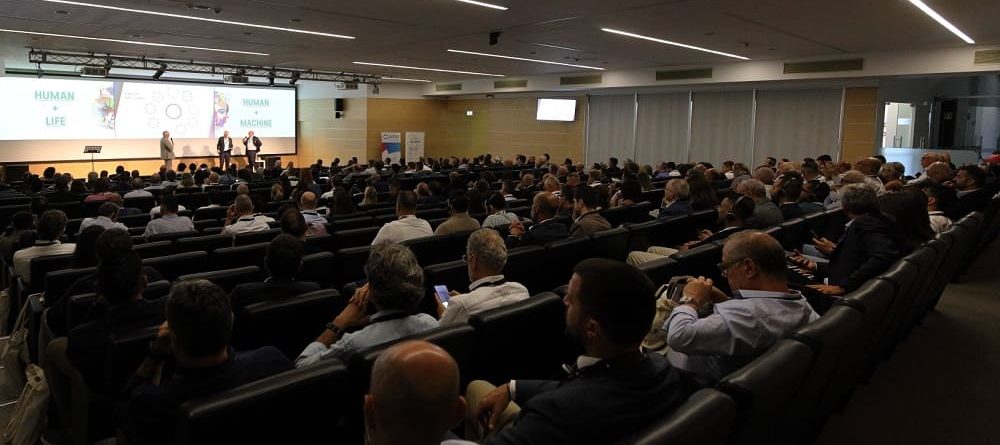
The central role of human decision-making in a market reshaped by Artificial Intelligence, geopolitical developments and energy interdependencies, new automation solutions and sustainability: these were among the key topics explored during the eighth edition of the Print4All Conference, the leading forum for the printing and converting supply chain in the years when Print4All itself is not being held.
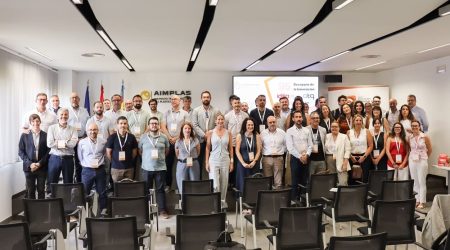
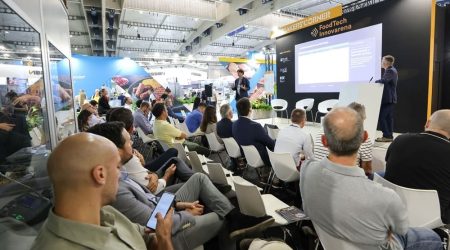
Held on 1 and 2 July at Ville Ponti in Varese, the event, organised by ACIMGA – the Italian Manufacturers’ Association of Machinery for the Graphic, Paper, Converting and Related Industries – and ARGI – the Italian Association of Graphic Industry Suppliers – in collaboration with Fiera Milano, welcomed 340 participants, 72 international delegates from 22 countries, 240 companies, 22 speakers, with the support of 23 national and international media partners and 18 industry associations.
The two-day event was guided by the theme “Humans Print the World”, developed around the Human+Machine and Human+Life pillars. Discussions focused on the relationship between people, technologies, materials and production processes, highlighting how the industry’s competitiveness will increasingly depend on its ability to integrate innovation, sustainability and skills throughout the entire value chain.
Opening the conference, Marco Calcagni, President of Acimga, Marco Marangoni, President of Argi, and Enrico Barboglio, Director of both associations, announced a major development: the creation of PACTA – Printing & Converting Technology Alliance, an organisation that brings together the two industry associations, creating new synergies to support the market and companies across the supply chain.
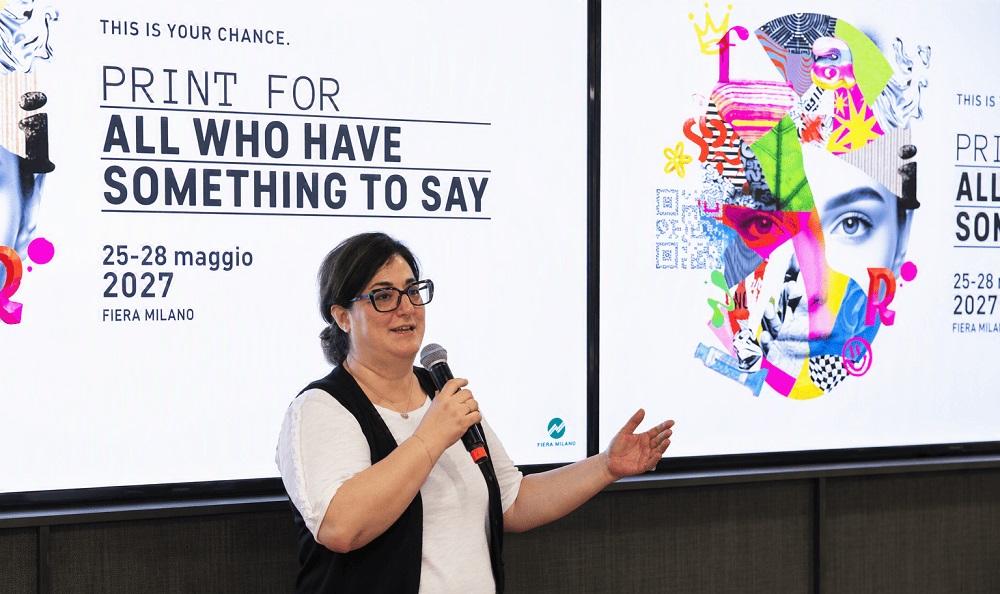
Paola Sarco, Head of Building and Industrial Exhibitions at Fiera Milano, presented a preview of some of the innovations planned for Print4All, which, under its new biennial format, will return to Fiera Milano from 25 to 28 May 2027. These include the first edition of Print Matter(s), developed in collaboration with Sapienza University of Rome and dedicated to research into innovative materials; the Corrugated Experience, offering an up-to-date snapshot of one of the market’s most dynamic and fast-growing segments; and Print4Future, an initiative aimed at young people, designed to introduce new generations to a sector offering numerous career opportunities and currently facing a growing demand for specialised skills.
THE HUMAN-MACHINE RELATIONSHIP: A BALANCE IN EVOLUTION
In printing and converting, the integration of human expertise and advanced technologies, starting with AI, is now one of the primary drivers of change. One message emerged particularly strongly and can be summarised in a key concept: intelligence cannot be delegated. AI can provide forecasts, recommendations, analyses and insights that improve production efficiency, optimise workflows and support decision-making. However, responsibility for evaluation, interpretation and final decisions remains firmly in human hands.
Value is therefore created through the interaction between technological recommendations and the human ability to contextualise, assess and translate them into action. From this perspective, the issue is no longer whether to use artificial intelligence or not: AI is already an established and increasingly widespread reality. The real challenge lies in developing effective governance models capable of maintaining control while maximising its potential.
INDUSTRIAL CASE STUDIES: THE ADDED VALUE IS NOT TECHNOLOGY, BUT THE ABILITY TO USE IT
Testimonies from numerous companies confirmed that people remain at the centre of the industrial process. Skills play a crucial role in a landscape where technologies are gradually becoming standardised. In this context, the key differentiator is not the technological solution itself, but the ability to manage and effectively integrate it within an organisation. As artificial intelligence becomes increasingly embedded in production and management processes, its effectiveness depends on data quality, accumulated experience, workforce training and companies’ ability to continuously monitor results. As highlighted during the conference, AI must be constantly trained, verified and improved – a process that once again confirms the central importance of the human factor.
SUSTAINABILITY BECOMES A COMPETITIVENESS DRIVER
Sustainability also played a central role in discussions, becoming increasingly intertwined with companies’ technological and production choices. Participants highlighted how any low-impact environmental solution must simultaneously be technically reliable, industrially scalable and economically sustainable. The transition towards sustainable production processes requires a systemic approach involving materials, technologies, processes and skills across the entire supply chain.
Sustainability therefore becomes a shared project that cannot be delegated to a single link in the value chain but instead requires collaboration among technology manufacturers, material suppliers and end users. In this scenario, sustainability is not simply an environmental objective but a practical lever for efficiency, innovation and competitiveness, capable of generating tangible value.
THE INTERNATIONAL SCENARIO: ITALY AND THE UNITED STATES COMPARED
To better understand how intelligent technologies are being adopted, Nathan Safran, Vice President Research at Alliance Insights, and Stefano Portolani, Senior Analyst at Stratego Group’s Printing Research Centre, analysed the Italian and US markets through a study conducted using the same questionnaire administered to both samples.
The findings showed that the United States, a pioneer in adopting these technologies, maintains a significant lead in the use of Artificial Intelligence: 76% of American respondents reported already using AI, compared with 57% of the Italian sample. However, while the number of users in the US appears to have stabilised, Italy is experiencing particularly rapid growth, accompanied by a more positive cultural attitude among companies that until recently were sceptical of these solutions (among businesses that have not yet adopted AI, 40% in Italy expect to do so within a year, compared with 31% in the United States).
The survey also highlighted a common factor in both markets: the main barrier is no longer access to technology but its integration into business processes. Differences emerge instead at the organisational level. In the United States, AI adoption is generally approached as a company-wide strategic decision; in Italy, implementation is more often entrusted to specialist teams and dedicated functions. In both cases, however, AI remains a constantly evolving phenomenon, characterised by continuous change that requires ever-increasing adaptability from companies.
US–CHINA COMPETITION AND EUROPE’S ROLE
In an increasingly complex landscape, a geopolitical perspective was essential. Alessandro Aresu, geopolitical analyst and expert in strategy and public policy, highlighted how Asia now represents the world’s leading manufacturing hub, while the United States continues to demonstrate a strong ability to attract capital, foster innovation and develop digital technologies.
In this context, particular attention must be paid to strategic dependencies. Recent international tensions have shown how vulnerable global value chains are to geopolitical dynamics, particularly in energy and raw materials. At the same time, talent will increasingly become the decisive factor in future competitiveness.
While the United States and China currently lead the rankings for artificial intelligence patents, China can also rely on a rapidly growing pool of young people pursuing STEM disciplines, further strengthening its manufacturing and innovation capabilities. This scenario encourages European companies to look beyond the short term and develop greater strategic awareness of the transformations currently underway.
PEOPLE AT THE CENTRE OF A CHANGING MARKET: THE EXAMPLE OF INCLUSIVE PACKAGING
Accessibility, readability, ergonomics and clarity of information are now key elements in packaging design, also because inclusive solutions often work better for everyone, delivering a richer user experience. Within this context, attention has focused on Design for All and the new role packaging can play in terms of inclusion, sustainability and accessibility.
Fonts, colours, shapes, readability and ease of use are no longer simply aesthetic features, but genuine tools for making products and services accessible to as many people as possible. In this scenario, creative agencies, printers and converters take on a new role: not merely project executors but enablers of inclusion, capable of making a tangible contribution to more user-centred design.
DIALOGUE AS A KEY ENABLER OF GLOBAL MARKET DEVELOPMENT
The Print4All Conference confirmed that, even in an era of ever-expanding intelligent technologies, supply-chain relationships continue to play a fundamental role in defining the skills needed to “guide” these technologies. One-to-one meetings, technology workshops and networking sessions encouraged direct dialogue between supply and demand, helping strengthen the continuous interaction among stakeholders, manufacturers and end users that will continue in the coming months and culminate in a new and powerful showcase at Print4All 2027.
The insights emerging from the printing and converting community will be further developed and explored at the next edition of Print4All through opportunities for discussion, collaboration and growth across the entire industrial ecosystem. Because the future of the industry depends not only on the technologies available, but on people’s ability to govern them, interpret them and put them at the service of a shared vision for development.
The next edition of Print4All will take place from 25 to 28 May 2027 at Fiera Milano.